Starting A New Morning Workout Routine: Day 5

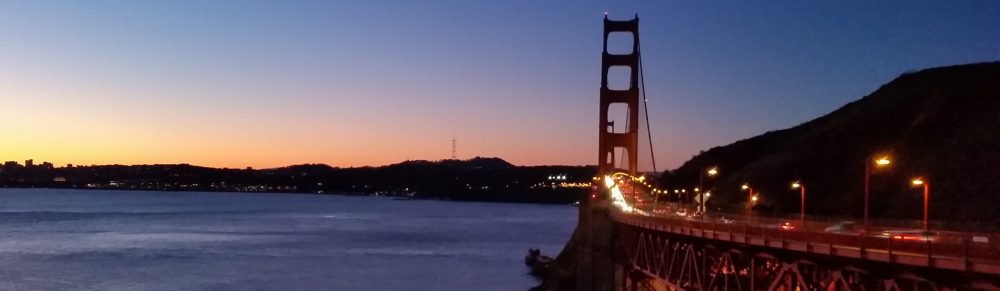
Walking back from the gym.

First week of my new routine is in the books! Today I woke up at 4:30am. I didn’t mean to wake up that early, I just did. Drank water. Used the restroom and tried to go back to sleep. No luck. So I decided to meditate, which I find is almost as restful as sleeping. So by 5:10am I decided to get up. My alarm was set for 5:15am. It didn’t even have the chance to go off. I guess I should be proud, I beat my alarm.

Then I ran through my usual ritual. Drank water. Boiled water. Put coffee in the filter. Oh yeah, forgot to mention, when I say coffee… it’s actually decaf. Ever since getting covid I’ve been trying to drink less caffeine. Washed my face. Put on my workout clothes. Did a couple sets of sit ups. Grabbed my keys, phone, and badge. Walked to the gym. Got to the gym by 5:55am.

Today was a weight day. But I decided to start by doing some light cardio. Elliptical for 15 minutes at level 9. Then treadmill for 15 minutes. Ran 1.13 miles. Nice and slow pace. But I’m getting the steps in. And I’m feeling stronger, faster, and definitely getting lighter.

So a quick note about my motivation to start this new routine. First, I’ve been an athlete my whole life. I always feel better when I’m in great shape or making progress toward getting into good shape. It helps with mental health and definitely relieves stress. Absolutely recommend it for anyone dealing with either of those two things.

Second, the last few years that hasn’t been the case though because of Covid and so I started getting all these pains and aches in my body. My wrist. My shoulder. My hip and low back all started acting up. So working out first started by rehabbing each of those injuries. Had to start super slow. Very light weight and not pushing myself too much. Just focused on getting a tiny bit better everyday. Then it became maintenance. Make sure that the injuries and pains were really gone. Now I’m in the process of improvement. Building strength and getting leaner. Pain free. Just sore a lot, lol.

Third, I made a goal to lose weight. I love the way it looks when I can see my abs. Well technically to change my body composition. Reduce fat and increase muscle. Weight is just a proxy for being lean and healthy. I gained about 30-40 pounds during covid. So I wasn’t feeling very good. Low energy. At my heaviest I was up to 230lbs. This week that I started my new routine I’m already down to about 210 lbs. But my goal is to get back to about 170 lbs. At that weight I’ll be very lean and ready to run a half or full marathon, which I would really like to do.

Lastly, the dark side of my motivation. As you’ll see above most of the motivation is positive. But some of it is a way of channelling all the negativity that is thrown at me into something positive. All the haters, all the envy, all the people that wish me ill, and all the people that talk shit, don’t believe in me, want to see me fail, or believe all kinds of evil shit about me. I take that hate and turn it into fuel for my success. So when I’m tired or in pain from running or lifting, I remember the haters and I use that as my fuel to get stronger, keep going, and accomplish more.

Anyway, back to the routine. Finished lifting (shoulders, chest, arms, squats, and calf raises). Weighed myself. Without shoes I weighed 206. Not bad 4 pounds down in 1 week. But I bet a bunch of that is water weight. Walked back home. Did my 3 sets of sit ups. Drank water. Talked to my honey. Talked to my daughter. Shaved. Showered. Got dressed. Wrote this. Now just got to grab my things and I’m off to work.

Ready for a great day! If you’re reading this I hope you have a great and blessed day too.
40 Years Ago the Sandinista National Liberation Front (FSLN) Overthrew the Brutal Somoza Dictatorship in Nicaragua

July 19, 2019 marked the 40th anniversary of the FSLN’s ouster of the Somoza dynasty, which had ruled Nicaragua since the 1930s.

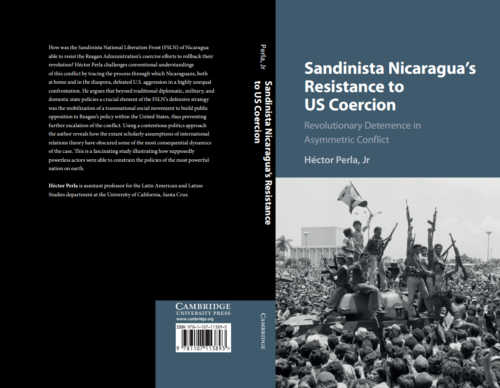
To commemorate that historic event, I posted a free preview of my book that analyzes the Sandinista Revolution and its relationship with the Reagan Administration on my Medium page. Below you will find a brief excerpt of Sandinista Nicaragua’s Resistance to U.S. Coercion, published by Cambridge University Press in 2017.

Preface to Sandinista Nicaragua’s Resistance to U.S. Coercion

I began to write this book without realizing it during my first quarter in graduate school. That quarter I took a course on strategic interactions. As I read through the literature, I immediately found “red flags” going up because Latin America — with the exception of the Cuban Missile Crisis — was completely missing, and even in that case the scholars exploring it focused on U.S. and Soviet actions to assess its outcome. Although there were some case studies on conflicts involving African, Asian, and Middle Eastern countries, the majority of the cases covered involved the major powers, such as the United States, USSR, China, Japan, or European powers. Unfortunately, as I’ve subsequently discovered, this focus on the great powers is not limited solely to qualitative case studies but is often the case in the International Relations (IR) field generally.

At the time, I was perplexed by the fact that so little of the scholarship focused on Latin America or U.S.–Latin American relations. I found even less on Latinos’ role in the U.S. foreign policy formation process. Interestingly, no one else seemed to find this problematic or even notice. This really puzzled and troubled me, because I was committed to becoming a serious IR scholar, keeping my regional specialization on Latin America and thematic focus on U.S. policy toward revolutionary guerrilla and social movements, as well as on exploring how Latinos influence U.S. foreign policy. So, over the next few weeks, I searched through the IR literature until I came across a few chapters and articles on Reagan’s failed efforts to oust the Sandinista National Liberation Front (FSLN) from power.

At first, I was just happy to read anything involving Latin America, but I soon found that something was missing: in these studies, the Central Americans had no agency. On the contrary, they were passive actors (objects) in the explanations, which instead focused exclusively on the strategies and actions of the Reagan Administration (subjects) to explain the cases’ outcome. And yet, this went against everything I knew to be true. Throughout my life I had personally witnessed tremendous transnational political activism on the part of Central Americans — primarily Salvadorans, Nicaraguans, and Guatemalans — in the United States. I found it hard to believe that their activism played no systematic role in the course of political events that unfolded between Central America and the United States during the 1980s.

Identifying these three voids in the IR literature — (1) the relatively limited work on U.S.-Latin American relations; (2) the lack of Latin American agency in IR accounts of strategic interactions between the United States and Latin America; and (3) the lack of scholarship on Latino/as’ participation in and impact on U.S. foreign policy — led me to reflect on three moments from my childhood, which illustrate why I responded so viscerally to challenge these absences in graduate school.

These three moments correspond to my earliest political memories. The first, from when I was about five years old, is of marching (while holding my mom’s hand as she carried my younger brother on her hip) on 24th and Mission Streets, in the heart of San Francisco’s Latino barrio, to protest Anastacio Somoza’s bombing of Nicaragua’s cities where innocent civilians were victims of the carnage.

The second memory is…

To finish reading my post please visit: https://medium.com/@HectorPerla415

If you are interested in purchasing the book you can do so here: https://www.cambridge.org/core/books/sandinista-nicaraguas-resistance-to-us-coercion/FEA9A716E750EBEDBF5A5EA38661C9FE

Still Another Reason to Love the Golden State Warriors

Wrongly Convicted Former Prisoners Get To See Warriors Play Clippers At Oracle

Earlier this spring, as the warriors began their latest push to win another NBA Championship, the organization took the time and effort to make an important gesture… They hosted a group of falsely accused and wrongfully convicted exonerees & members of Northern California’s Innocence Project.

Incredible and inspiring people who have overcome so much and now fight to help others in the same or similar plight.

Check out the video of the exonerees at the game here.

As great as the Dubs’ victories are, and I love every single one of them, the legal victories to exonerate the wrongfully convicted are FAR more meaningful! Here’s a recent example of what this kind of victory looks like… https://www.mercurynews.com/2019/05/15/man-exonerated-after-17-years-in-prison-for-2002-san-jose-shooting/

I am passionate and dedicated to educating people about the importance of fighting for due process and providing zealous legal defense to prevent wrongful convictions because of my own lived experience overcoming a false accusation. Although I was not arrested and never faced any charges, just being under a cloud of suspicion due to a defamatory social and news media smear campaign allowed me to catch a tiny glimpse of what the nightmare of wrongful conviction feels like for the men and women who are put through that hell.

That’s why I have decided to dedicate the rest of my life to fighting against the social, political, and legal evil of wrongful convictions, and to ensure that anyone who suffers that injustice will have access to the resources necessary to win exoneration.

I can only imagine the pain and despair of trying to unsuccessfully convince others that you are innocent of the crime for which you are wrongly convicted. To understand a tiny fraction of that suffering I highly recommend reading the book Just Mercy by Bryan Stevenson, checking out his Ted Talk, and visiting his organization’s website.

But most of all, I highly encourage you to check out the story of Walter McMillian, who was falsely accused of a crime he did not commit… not by just one person, but by multiple people. These people’s self-serving accusations became the official story, which was repeatedly echoed in the news and by local officials to the point that nearly everyone who heard it “knew for sure” that he was guilty. As a result, Walter ended up serving 6 years ON DEATH ROW for something he did NOT do before finally being exonerated. Walter’s story is a cautionary reminder that injustice takes many shapes, including condemning and passing judgement on a person based on accusations and without knowing all the facts or weighing all the evidence.

Still more powerfully, Walter’s story is a tribute to the resilience of people fighting for justice and an inspiration to anyone facing a similar challenge. In his own words…

“… I know it may not matter to you, but it’s important to me that you know that I’m innocent and didn’t do what they said I did, not no kinda way.” -Walter McMillian

And for the Warriors, supporting exoneration work this season is not just a one and done situation. It is part of their commitment to excellence on and off the basketball court. Check out the Warriors’s head coach, Steve Kerr, in a past pitch in support of legal advocates fighting for the exoneration of innocent people!

For all these reasons, I am proud to be a part of DUB NATION and applaud the Golden State Warriors for their support of the passionate and devoted people across the country who work to exonerate the men and women who are wrongfully convicted of crimes they did not commit. I look forward to continuing to educate the public about the need to defend everyones’ rights to due process and to advocate on behalf of people accused of crimes.

Hector Perla Jr.