
Hector Perla: From Falsely Accused to Fierce Advocate for the Accused, Incarcerated, Wrongfully Convicted, & those fighting for a second chance.
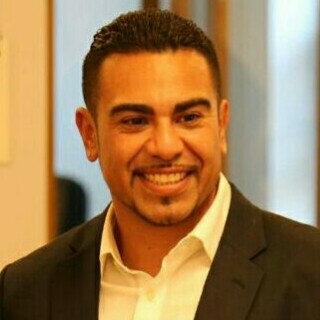
I am a Deputy Public Defender working to transform the traumatic experience of being falsely accused of a crime into a blessing for ordinary people fighting criminal charges in our unequal legal system. My goal is to be a fierce legal advocate for all my clients. At the same time, I strive to bring political awareness to the plight of the countless men and women across our country who are falsely accused of crimes, or have been wrongfully convicted for crimes that they did not commit. I also try to draw attention to the need for better funding for public defense to ensure that everyone accused of a crime can have high quality representation even if they can’t afford to pay for it.
STILL I RISE (Excerpt) by Maya Angelou

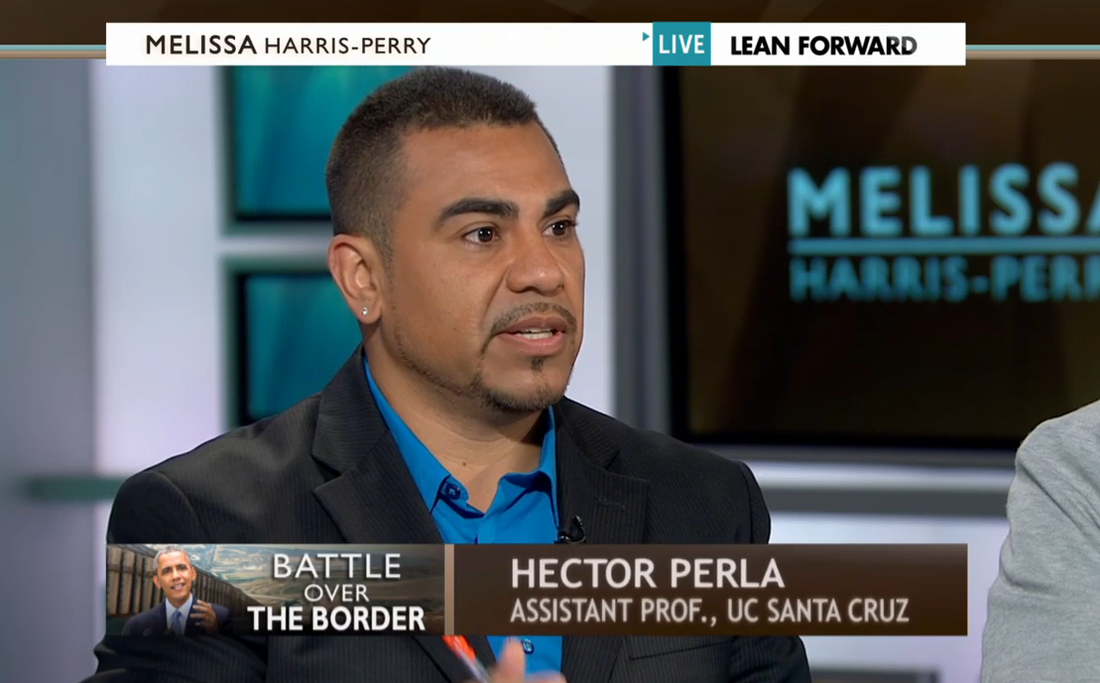
WHY I CHOSE TO BECOME A PUBLIC DEFENDER?
Before becoming a public defender, I was an internationally-recognized and award-winning professor of Latin American & Latino Studies and Political Science at the University of California, Santa Cruz until a student falsely accused me of a serious crime. Thankfully in my case it was never a “he said, she said” situation. Not only did I have direct evidence (emails, texts, pictures) to prove my innocence, but there were also several impartial witnesses present whose testimony corroborated my version of events, so I was never charged criminally nor was I a part of any civil action or settlement.
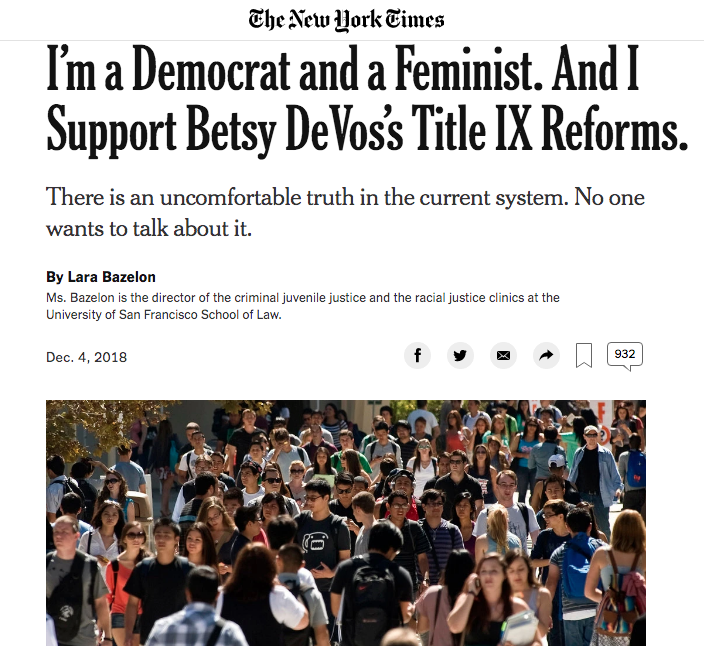
But the experience led me to realize that being innocent doesn’t protect you, especially when the procedures used to adjudicate the allegation “lack even a semblance of due process” (Doe v. Regents of the UC 2018). Despite the evidence confirming my innocence, the truth didn’t matter under UCSC’s Title IX’s single investigator model, which biases the adjudication process against the accused. For a feminist critique of Title IX see Title IX Reforms or click on the picture of the article below.
More importantly, the experience set me on a mission to become a legal advocate for the falsely accused and wrongfully convicted. The process of fighting the allegations against me taught me the importance of knowing the law to protect your rights. It also showed me how easy it is to be falsely accused of a crime when you don’t know your rights, especially under systems—like the then-existing single investigator model—that violate your fundamental rights to DUE PROCESS and fairness.
Under the single investigator model, one administrator serves as investigator, judge, prosecutor & jury — which means there is no neutral fact finder. This system was used at many universities, including the University of California. However, in 2018 California courts started reviewing how these universities were conducting their investigations and have found that the Title IX procedures were not providing fair hearings for the accused in violation of their fundamental rights to Due Process.
In Doe v. Regents of the University of California, 28 Cal. App. 5th 44 (2018) the court ruled that the University of California’s Title IX process was so unfair that it lacked “even a semblance of due process.” The ruling went on to state: “It is ironic that an institution of higher learning, where American history and government are taught, should stray so far from the principles that underlie our democracy.” The results have been similar nationwide with the Court of Appeals for the Sixth Circuit reaching a similar holding in 2018 against the University of Michigan (Doe v. Baum, 903 F.3d 575). Then in a landmark 2019 decision (Doe v. Allee, 30 Cal. App. 5th 1036), California’s Second Appellate District held that a Title IX office’s use of the Single Investigator Model “is fundamentally flawed” as a disciplinary procedure because it inherently deprives the accused of a chance for a fair hearing.
In essence, these rulings mean that the University of California violated my Constitutional rights when it failed to provide me a fair hearing that would allow me to prove my innocence.
Although it feels good to be vindicated by the Doe v. Regents of the University of California, Doe v. Allee, & Doe v. Baum rulings, the whole process opened my eyes to the vast reality of injustice for the falsely accused and wrongfully convicted that goes far beyond me or my personal experience. What I experienced was just the tip of the iceberg of the nightmare that leads to wrongful convictions…
The Wrongly Convicted: Why More Falsely Accused People Are Being Exonerated Today than Ever Before
I was far luckier than most people who are falsely accused and wrongfully convicted. Unfortunately, the experience taught me that being innocent doesn’t protect you, especially if you are a man of color or come from a low-income community. Your silence doesn’t protect you. Even when you are never criminally charged or arrested, you can still be defamed, slandered, and vilified publicly as in my case or for instance, see the similar case of Malik St. Hilaire.
Additionally, I found out that there are very few resources available to help people facing false accusations or similar types of cases, which are increasingly common in today’s online, news and social media-driven society. But if you are charged criminally and/or wrongfully convicted it only gets worse. Check out the podcast story of Joe Diaz, who served 9 years in prison for a crime he didn’t commit before being exonerated by DNA.
Thankfully, in 1963 the United States Supreme Court ruled that the 6th Amendment of the US Constitution guarantees EVERYONE a right to an attorney, not just in federal court but also in state courts. Additionally, if you cannot afford an attorney, the government must appoint one for you. This was the classic Gideon v. Wainwright, 372 U.S. 335 decision. This decision enshrined the role of public defenders in our society. Unfortunately, public defender’s are still drastically underfunded especially when compared to prosecutors. As a result, they are often overworked and underpaid. Despite knowing this, I chose to become a public defender because of my experience being falsely accused. That experience gave me a tiny glimpse into what it is like to be wrongfully convicted. As a result, I made a commitment to becoming the type of zealous advocate that I would have wanted if I had faced criminal charges.
Luckily, there is also a growing movement around the country (https://innocencenetwork.org) and an increasing awareness of the issue in popular culture thanks to programs like the podcast “Serial” (that brought attention to the case of Adnan Syed) and the Netflix series “When They See Us” about the (exonerated 5 from the Central Park case).
However, the most important lesson I learned was that I could transform the trauma of being falsely accused into a blessing for others facing similar circumstances by becoming a fierce legal advocate for the falsely accused and/or wrongfully convicted. (Check out the story that inspired me: the case of Jarrett Adams).
I now believe that I was dealt this adversity to show others that not only can a person overcome a false accusation, but they can actually come out stronger and better off because of it. In this way I hope that my experience will provide hope to anyone fighting a false accusation or wrongful conviction, as well as inspire them to find their strength to overcome the stigma, discrimination, despair, and isolation that accompanies that struggle!!
 Hector Perla.com