Unknown's avatar

About Hector Perla

Author | Attorney | Advocate for the Accused & Incarcerated. Turning the pain of being falsely accused into a blessing for others.

Birthright Citizenship and the Fourteenth Amendment: Law, Power, and the Meaning of Jurisdiction.

The Trump Administration’s challenge to birthright citizenship presents itself as a technical argument about constitutional text. It is not. It is an argument about who the law sees—and who it refuses to see.

At its core is a claim: that the Fourteenth Amendment requires not just birth on U.S. soil, but being subject to the “complete jurisdiction” of the United States, understood as full political allegiance (i.e., not owing allegiance to any other sovereign). From that premise, the Administration argues that children of undocumented immigrants fall outside the Constitution’s promise of citizenship.

The argument draws on Elk v. Wilkins and attempts to narrow United States v. Wong Kim Ark into a rule about lawful presence.

This argument reveals more than it intends.

Beneath its legal form lies a deeper question the law cannot avoid: whether the Constitution will recognize the rights of all people because they live under its jurisdiction/power, or whether a subset of people born in the United States will be denied recognition (i.e., birthright citizenship) through the imposition of a separate additional requirement never before required. Such a requirement would condemn a huge number of American-born babies to a permanent “separate and unequal” status simply by virtue of their parents’ misfortune.

Read faithfully—textually, historically, and doctrinally—the answer is clear:

The Constitution does not wait for recognition. It recognizes those who are already subject to its power.

Children born in the United States to undocumented immigrants are citizens at birth.

Jurisdiction Is About Power, Not Permission

The Citizenship Clause provides:

“All persons born or naturalized in the United States, and subject to the jurisdiction thereof, are citizens…”

The phrase “subject to the jurisdiction thereof” does real work. But that work is not to test belonging. It is to describe power.

Opponents define jurisdiction as political allegiance—membership, consent, mutual recognition. But the Constitution does not use that language on this subject or in this matter. It uses the language of authority.

Jurisdiction, in constitutional structure, means being subject to sovereign power in the ordinary course of law.

That distinction matters.

Because allegiance can be claimed or denied.
But power is experienced. Jurisdiction is a lived experience. The statutes, laws, and political decisions that shape and affect your everyday life are straightforward.

And the Constitution, at its most honest, speaks in terms of what the state does—not what it says about those to whom it does it.


II. The Exceptions: Where Power Does Not Reach

In the Supreme Court Case, United States v. Wong Kim Ark the phrase “subject to the jurisdiction” excludes ONLY a narrow, historically recognized set of categories:

  • Children of foreign diplomats
  • Children of occupying enemy forces
  • Members of sovereign tribal nations at the time of ratification

These are not people with divided loyalties. They are people beyond the full reach of U.S. law.

This is the limiting principle: not imperfect allegiance, but the absence of sovereign authority.

Where the state’s power does not fully extend, citizenship does not attach.

But where the state’s power does extend, so does birthright citizenship.


III. Elk v. Wilkins: A Case About Sovereignty, Not Belonging

In Elk v. Wilkins, the Court held that a Native American born into a tribal nation was not automatically a citizen.

But that holding rests on a premise the law has since abandoned: that tribal nations were separate sovereigns whose members were not fully subject to U.S. authority at birth.

The Court’s language about “complete jurisdiction” and “direct allegiance” must be read in that context. It describes a boundary between sovereigns—not a hierarchy of worthiness.

To extend Elk beyond that context is to transform a case about sovereignty into a tool of exclusion. And it would enshrine a doctrine of “separate and unequal” for a large number of children simply because of their parents’ immigration status.

That move is not interpretation. It is revision. And it is immoral hypocrisy.


IV. Wong Kim Ark: The Constitution Refuses Status-Based Citizenship

The controlling rule for deciding this case on constitutional grounds comes from United States v. Wong Kim Ark.

There, the Court affirmed a principle older than the nation itself:

Birth within the territory and under the sovereign authority of that state, confers citizenship—subject only to narrow exceptions.

The Court did not create a test based on parental status. It did not distinguish between lawful and unlawful presence. It did not condition citizenship on permission.

It adopted a rule grounded in reality:

If the state governs you at birth, it cannot deny that you belong to it. It must and does recognize you.

That is not a technical rule. It is a bedrock constitutional principle: the state cannot exercise power over someone without recognition or accountability. (Think “No taxation without representation.”)


V. The False Divide: “Civil” vs. “Political” Jurisdiction

The Trump Administration is attempting to divide jurisdiction into two categories:

  • Being subject to the law (civil or territorial jurisdiction)
  • Being part of the political community (complete jurisdiction)

But that distinction cannot be sustained.

Before the Fourteenth Amendment, the U.S.-law used status—race, ancestry, exclusion—to define who belonged. That framework reached its most infamous expression in Dred Scott v. Sandford. Denying African-Americans the benefits or recognition of birthright citizenship.

The Fourteenth Amendment rejected that world. It replaced subjective tests of belonging with an objective rule: birth under sovereign authority equals citizenship.

The proposed “civil versus political jurisdiction” distinction attempts to restore the old discredited Dredd Scott framework in a more refined form for a different subset of Americans. It concedes that the state may exercise full legal power over a person—arrest, detention, prosecution—while withholding full constitutional recognition. It divides power from belonging.

That move is not new. It is structurally identical to the logic the Court embraced in Plessy v. Ferguson.

In Plessy, the Court maintained that Black Americans were subject to the same sovereign authority as white citizens—governed by the same laws, punishable by the same state—but could nonetheless be assigned to a separate and subordinate status under the fiction of “separate but equal.” The state’s power was total; its recognition was conditional.

The “civil versus political jurisdiction” distinction operates in the same way. It asserts that individuals may be fully subject to the coercive authority of the United States while existing outside the full constitutional community that authority creates. It is, in effect, a doctrine of “separate and unequal”—a claim that the state may govern completely without recognizing completely.

That is precisely the constitutional contradiction the Fourteenth Amendment was designed to eliminate.

To accept this distinction is to revive, in doctrinal language, a principle the Constitution has already rejected: that the law may impose obligations without conferring belonging, that it may exercise power without accountability or recognition.

The Fourteenth Amendment does not permit that division. It binds jurisdiction to recognition. It makes “being subject to” sovereign authority THE basis of membership.

To introduce a membership test—whether framed as allegiance or status—is to return, in more polite and acceptable language, to a structure the Constitution was amended to destroy.


VI. The Reality of Power: Undocumented Immigrants and Jurisdiction

There is nothing partial about the jurisdiction the United States exercises over undocumented immigrants.

They are:

  • Arrested under U.S. law
  • Prosecuted in U.S. courts
  • Detained by U.S. authorities
  • Removed through U.S. processes

This is not incomplete jurisdiction. It is comprehensive.

The state does not hesitate to exercise power over them. It does not treat them as outside its authority when it enforces its laws.

The question is whether it can deny the legal consequences of that power when a child is born into it.

The Fourteenth Amendment answers that question…

A government that claims the full measure of power over a person cannot deny the full measure of recognition that power entails.

Anything less would replicate the very structure the Amendment was written to abolish: a system in which the state governs absolutely, but recognizes selectively.

The Constitution does not allow a “separate and unequal” regime for children born in the United States.

The Constitution requires something more honest and straightforward: Birthright Citizenship.

If the law binds you, it must recognize you.


VII. The Constitutional Principle

When text, history, and doctrine are read together, the rule is not complicated:

Citizenship follows from the fact that you are subject to the sovereign power of the United States at birth, unless a narrow sovereignty-based exception applies. In the case of undocumented immigrants’ U.S.-born children, none of those exceptions apply.

Children of undocumented immigrants:

  • Are born within U.S. territory
  • Are fully subject to U.S. law
  • Fall within no recognized exception

They are citizens.


VIII. Conclusion: The Constitution Must Answer for Its Power

The argument against birthright citizenship ultimately asks the law to do something dangerous: to exercise power without recognizing the rights of the people over whom that power is exercised.

But the Fourteenth Amendment was written in the aftermath of a system that did exactly that.

It answered with a principle that remains as urgent now as it was then:

The state cannot claim authority over a person while denying that person’s recognition and belonging.

To accept the “complete jurisdiction” theory is to permit that contradiction—to allow the law to govern fully, but recognize selectively.

The Constitution does not permit that.

Because at its core, the Citizenship Clause is not just a rule about birth.

It is a limit on power.

If the law reaches you, it must recognize you.
August Push-Up Challenge: 31 Days of Sweat, Setbacks, and Growth

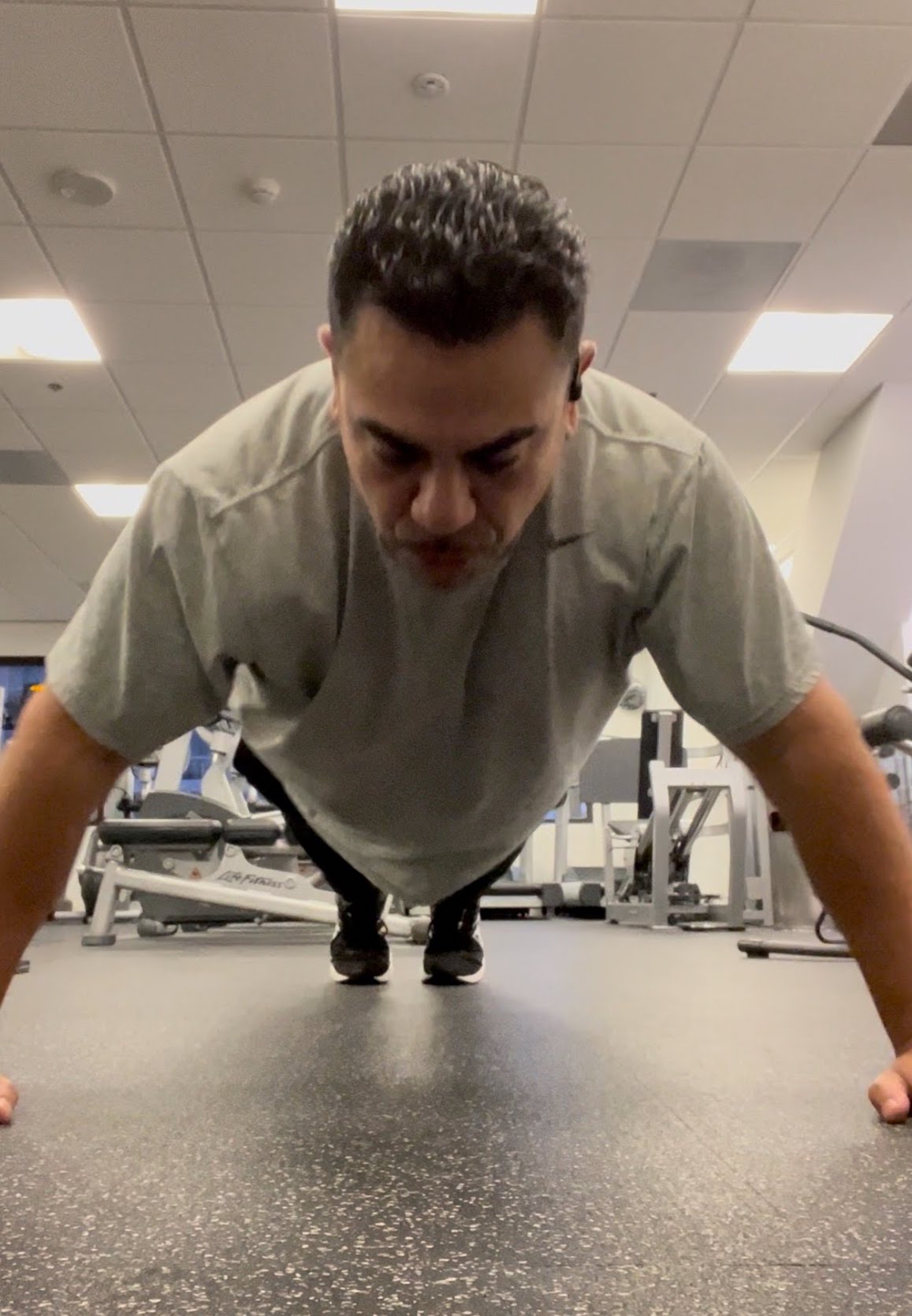
August 2024 was my month of push-ups—31 days, 100 push-ups every day. It seemed simple enough on paper: consistency, discipline, and a dash of mental toughness. The reality? A bit messier, with some surprising lessons along the way.

I kicked things off strong on August 1, hitting my 100 daily push-ups like clockwork. I powered through the first half of the month without missing a single day. It felt good—great, actually—to be on top of my game. Each day’s set of push-ups felt like a small victory, a promise kept to myself. But, as we all know, life doesn’t always play by the rules.

The first crack appeared during the weekend of August 17-18. I let myself slip, missing both days completely. Maybe it was the weekend mode kicking in, maybe it was just a lapse in focus. But, determined not to fall behind, I pushed myself hard the following week. From August 19-22, I made up for the lost time by upping the ante to 150 push-ups each day. That’s right—no shortcuts. I was back on track, and it felt like I’d beaten the weekend slump.

Then came another dip. The weekend of August 24-25 rolled around, and this time, I didn’t miss entirely but didn’t quite hit the mark either. I managed just 25 push-ups on the 24th and 50 on the 25th. My rhythm was off, and it was starting to show. The real challenge, however, was yet to come.

From August 26-29, I found myself struggling to stay motivated. My energy levels dipped, and I just couldn’t seem to get into the zone. I only managed 50 push-ups each day, half of what I’d set out to do. It was frustrating, but I knew this slump was part of the process. The body, like the mind, sometimes just hits a wall.

But as the month wound down, I wasn’t about to let my challenge end on a low note. On August 30 and 31, I rallied. It wasn’t about catching up or compensating for what I’d missed—it was about finishing strong, no matter what. I cranked out 100 push-ups on each of those final days. There’s something satisfying about finishing on a high note, even when the journey hasn’t been perfect.

In the end, I didn’t quite reach my original goal of 3,000 push-ups for the month. But you know what? I still managed to knock out 2,675 push-ups—2,675 more than I would have done if I hadn’t pushed myself to try. Sometimes, it’s not about hitting a specific number, but about taking on the challenge and seeing how far you can go. Every push-up counted, and the effort wasn’t wasted because I got stronger in through the process.

Would I do it again? Absolutely. I’m still chasing 3,000 pushups in 1 month!!

Getting Back To My Early Morning Workout Routine!

It’s been a long time since I’ve been able to write.

In the last year and a half since I wrote I’ve experienced lots of changes and been extremely busy. Last year, I passed the California Bar Exam and became a licensed attorney. Since then I’ve been working as a Deputy Public Defender doing my absolute best to protect my clients’ rights and fighting for their innocence. There’s been times when I’ve been able to workout regularly and times when I haven’t worked out for months.

But now it’s time to get back to a regular routine!! The holidays were brutal. I didn’t workout at all and put on about 10 of the pounds I had previously lost and managed to keep off. So I started this year off determined to get back to exercising on a regular basis. Slowly but surely I have been increasing my workouts over the past month. I’m finally at a point were I’m ready to start the early morning workouts again.

I’m going to try to recreate the same routine that I had so much success with last time. Getting up early 430 or 5AM. No caffeine (okay… minimal caffeine). Staying hydrated. Getting good sleep. Working out regularly. Avoiding or minimizing unhealthy habits. And trying to automate my daily good habits as much as possible. Then give myself one “cheat” day for food (Friday), and two days of active rest and recovery over the weekend.

At least that’s the plan… wish me luck!

Adapting to Change

Another quick post today. This month has been very hectic. Lots of travel. All good. Vacation. Time for friends and family. Absolutely love it. But still, it has been difficult to keep on my morning workout routine because I’ve only been home for a total of about 10 days.

On top of that, this month I have had to prioritize a few intellectual projects in the early morning hours, when I would usually be doing my workout routine. I find that I can’t do my intellectual projects after work or at night because they amp my brain up too much and then I can’t get enough good, high quality sleep even with meditation.

Photo by cottonbro on Pexels.com

The next morning I’m completely exhausted and I’m not able to workout at 5am and then go to work and function professionally to the standard that I demand of myself.

I don’t know if changes in location, environment, company, and priorities throws you off… but the changes I’ve had to make this month are causing the number and quality of my workouts to go down drastically. Plus, the quality of my diet has suffered a lot too. I think I may have to temporarily adjust my workout routine from the early morning to either lunch time or after work. I haven’t worked out in a week! Ugh, it’s starting to get to me!

Time to hit the reset button!! Look at my schedule for the next couple of weeks, and readjust my routine to ensure that I get to the gym as soon and as much as possible. Wish me luck.

Photo by Andres Ayrton on Pexels.com

I’ll let you know what I come up with and how it goes.

Have a great day! 🙂

Back At it!

Hi all. Quick post today. After two weeks of sporadically following my morning routine because of travel and the subsequent need for rest after a vacation, I’m back on my routine. I took a little vacation for the Labor Day weekend. Nothing big just got to visit and hangout with family.

Then last week came back and just couldn’t get my sleep routine back on track. So I’d wake up really exhausted. I think it was the heat. It kept waking me up in the middle of the night so I didn’t get that high quality deep sleep to rest, recover, and replenish myself. That’s one thing about having a fitness tracker you can actually see that there are physiological reasons why we feel exhausted some mornings and completely revitalized other mornings.

I decided to get some magnesium supplements because I remember that it helped me in the past with alleviating soreness and also to sleep better. I took that last night with dinner and I did notice this morning that I had much more deep sleep according to my fitness tracker than I had last week. I’ll see if that continues.

Anyway, followed my routine this morning. Up at 5:15, hit the gym and now I’m back. Drinking a nice cup of (decaf) coffee and a slice of sourdough toast with pesto and a slice of lox. So delicious! Time to get ready for work.

Have a great day!

Photo by Daniel Gorostieta on Pexels.com

How I Created My Early Morning Workout Routine In One Month – MY RESULTS

In August I set out to create an early morning workout routine that I could make a permanent part of my everyday life. Over the 31 days of August I followed a daily routine and created a set of habits to ensure that waking up at 5am and getting in a good workout became integrated as part of my morning ritual. I worked out pretty much every single day that month. Even on my rest days (i.e. weekends), I stayed pretty active.

What were my results? And what can I share with others hoping to create their own workout routine, new healthy habits, or a daily ritual for self-improvement? I’m going to share all that with you. But let me start at the beginning.

Like many people, I gained a lot of weight during the COVID lockdown. Not just because of the lockdown, but also because I had gotten several repetitive stress injuries. I had tendonitis (or carpal tunnel syndrome, not sure which) in my wrist from typing, severe hip and ankle tightness-pain from sitting for extended periods of time, and rotator cuff pain in my shoulder. All those injuries kept me from working out. The pain was so bad, I couldn’t even do push ups or a slow jog. My only exercise was walking my dog.

At the beginning of July, I decided that enough was enough. I was tired of being out of shape. I was tired of being tired all the time. I wanted my clothes to fit again. I came up with two goals for myself: 1) I wanted to get in good shape, 2) I wanted to be healthy.

But, I had to start by rehabbing all my injuries using exercises that I’d learned before from physical therapy or that I noticed made the pain go away through trial and error. I made rehab the fourth thing I did after waking up, drinking a glass of water, and using the restroom. I did that religiously, every day. After a few weeks all my pains were gone. I was able to do a few push ups and jog slowly without pain.

In the meantime, I wrote down several lagging or lag measures, which would signal that I’m in good shape and healthy. First, I wanted to drop to 170 lbs. Second, I wanted to be able to run a mile in under 7 minutes. Third, I wanted to be able to keep that pace up for about 15 miles. Fourth, I wanted to get my six pack abs back. Fifth, I wanted to be able to do 60 push ups non-stop.

I didn’t jump right in to try to accomplish my lag measures. Lagging measures are hard to focus on because they are long-term outcomes. Instead, I identified and focused on my lead measures. Lead measures are short-term activities that lead to the outcome we want. In other words, daily repetition of lead behaviors/activities predict success for achieving our lag measures and ultimately our goals.

As July came to an end I formulated my plan. I wrote out the small things that I would have to repeat on a daily basis over and over again in order to accomplish my goals (i.e., going to the gym, lift weights, run, sit-ups, core-abs, rehab, and stretching). These are my lead measures, because if I did them repeatedly their compound effect would lead to the outcome that I wanted.

If I was going to get serious about working out early in the morning, I would have to be up really early to be able to get to work by 8am. My goal was get up at 4:30 or 5am so that I could get to the gym by 5 or 530am. So the first thing I had to do was figure out a way to wake up that early and not just go back to sleep.

I knew that drinking water, washing my face, putting on workout clothes, and drinking coffee were all effective ways of boosting my energy that early in the morning. If I did those 4 things, the probability that I would go to the gym was really high. I also told myself that If I did those things and still wanted to go back to sleep then I could. For whatever reason, knowing that and saying that to myself helped me get up, especially on the really tough days. But most important of all, I found that I need at least 7 hours of sleep per night to function optimally. So I made going to sleep early the night before a top priority.

That became my routine.

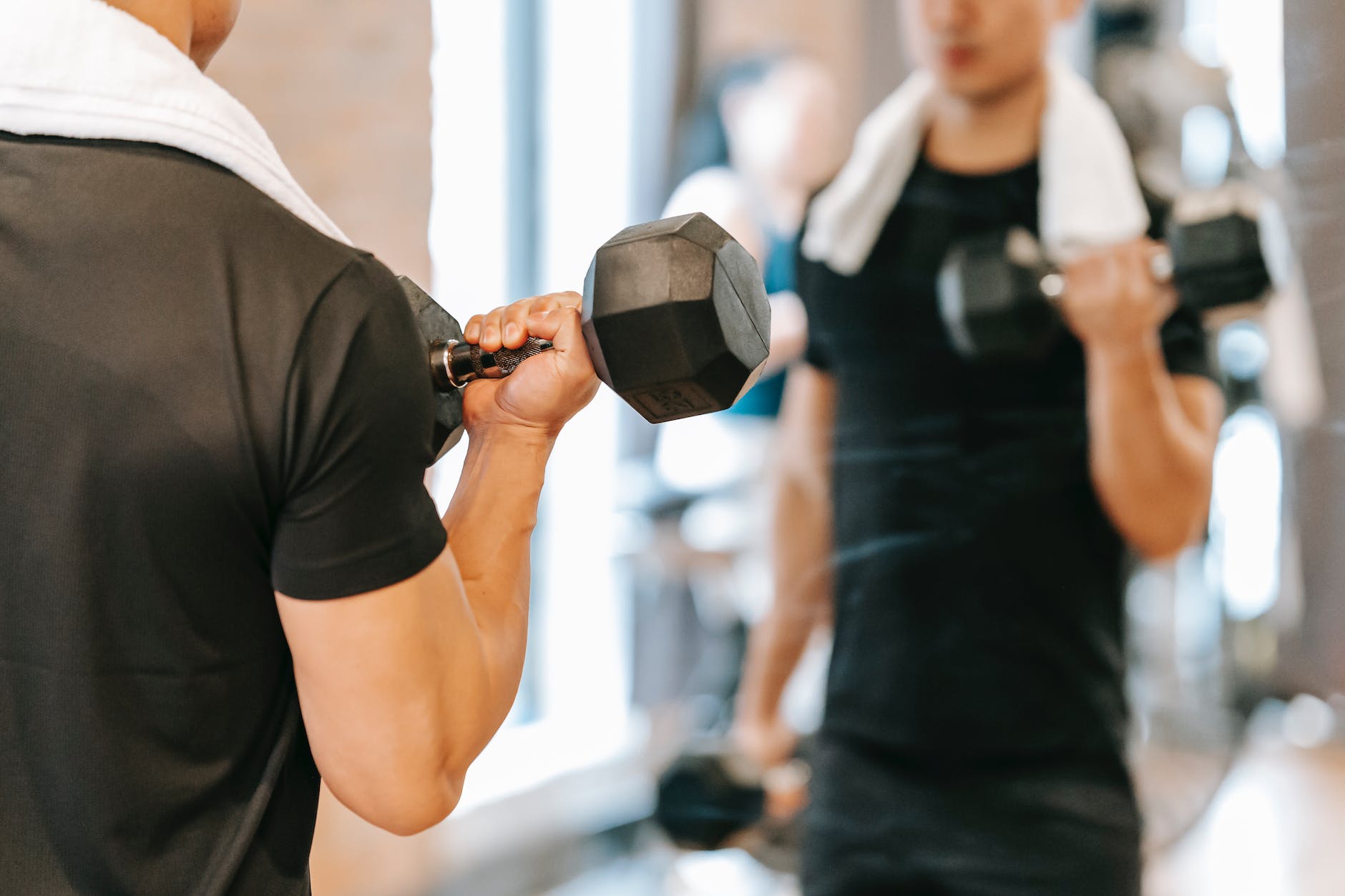
Once I got to the gym I would alternate between doing cardio (elliptical machine, stationary bike, and treadmill) and strength training (i.e., weight lifting, resistance bands), and core work (sit ups and planks). Usually an hour of cardio and an hour of weight lifting. It didn’t start out that much, but slowly and surely over time it kept increasing. I did that 5 days per week, and rested on Sat. and Sunday.

So what were my results…

Well, I hit almost all of my lead behaviors. I did cardio, strength and resistance band training, sit ups, and planks pretty much every day. I was very consistent about the habits I had stacked together to help me wake up early and it worked for me. It wasn’t easy. A lot of days it was tough. But by the second half of the month my morning routine was pretty much a morning ritual that I run through even on the days that I don’t go to the gym.

As you can see from my before and after picture, I also had good results physically. I dropped from 220 lbs at the start of the month to 201 lbs, on Aug 31. I was able to run a mile in under 10 minutes. But, I can only keep that pace up for about half an hour. I still don’t have washboard abs, but I don’t have a keg anymore either.

So even though I’m not close to my running goal and still got a long way to go to reach my lag measures, I’m proud of all that I was able to accomplish in 31 days. Plus, I have a new morning ritual that has become easy to do. As long as I keep it up I should be able to reach my goals by the end of the year!

How I Created My Early Morning Workout Routine In One Month: Day 31!

DONE!! One month of creating a new morning routine. Thirty-one days of repeating a set of habits over and over again that allowed me to consistently get up early to workout and start my day right!

Over the next few days I’ll share more about my results. I’ll also share what I learned, and some thoughts on what may be helpful to others. But today I’m going to finish off this set of posts by running through my routine (and specifically what I did today).

So I have to be honest, I got a little bit of a late start today. Yesterday, we had a huge win for one of our clients! Afterwards I went with a few colleagues to celebrate. It was low key but it definitely kept me up past my bedtime. I was really tired when my alarm went off and I gave in to that little voice of weakness and hit the snooze button. Twice. Ugh! Tough to admit but yeah that’s the truth.

Finally, got up at 5:30am. Ran through my routine. Turned off the alarm. Wanted to snooze it again, but thankfully found the strength and determination to power through. Sat up. Turned on the lights. Put on my slides. Walked to the kitchen Opened the fridge and pulled out cold water. Poured it into a 16 oz glass. Poured a teaspoon of apple-cider vinegar into it. Checked the electric kettle. It was full. Turned it on. Grabbed a coffee filter. Put it into the pour over cone (sieve). Here’s a picture of what I’m talking about…

Put a tablespoon of decaf coffee and a tablespoon of regular coffee. This morning I needed a little bit of caffeine. I’ve been pretty good at not needing it all month.

Drank my cold water. Walked to the restroom. Washed my face. Gently splashed water into my eyes. Dried my face. Walked back to the kitchen. The water had finished boiling. I poured the hot water over the coffee and just waited to breathe in the rich aroma of the coffee. Mmmmm, so delicious!

Went back to my room to put on workout clothes. Did a set of sit ups. Came back for my coffee. Today it just tasted a little bit more delicious. Or maybe I just appreciated it a little bit more.

Grabbed my keys, phone, and ID. Headed out the door. Usually when I walk into the gym it’s still pitch dark out. But today I got to the gym at about 5:57. Unlike most of the previous days this month, the sun almost caught me. I’ll take it though, because my reward for these 31 days was that I got to see the beginnings of a beautiful sunrise…

Easy workout today. Elastic band rehab to start. Shoulder rehab next. Then jumped onto the elliptical for 30 minutes. Then hit weights. Chest and shoulders. In between each exercise I did 1 or 2 sets of sit ups. I’ll be back in the gym for lunch to put in a more serious weight session.

Walked back home. Drank another big glass of water to make sure I don’t get dehydrated. Shaved. Showered. Got dressed for work. Now writing this and it’s time to go.

Have a great day or night depending on when you read this!! 🙂

I hope you’ve enjoyed the series. Either way, please let me know what you’ve thought about my Early Morning Workout Routine series in the comments section below.

How I Created My Early Morning Workout Routine In One Month: Day 30

Quick entry today. Got to be at work early. Ran through my morning routine like usual. [Side note: The sheer repetition of doing my routine over and over again for 30 days makes it almost automatic. I end up doing it even on my rest days just out of habit now.] Walked to the gym. Still dark outide.

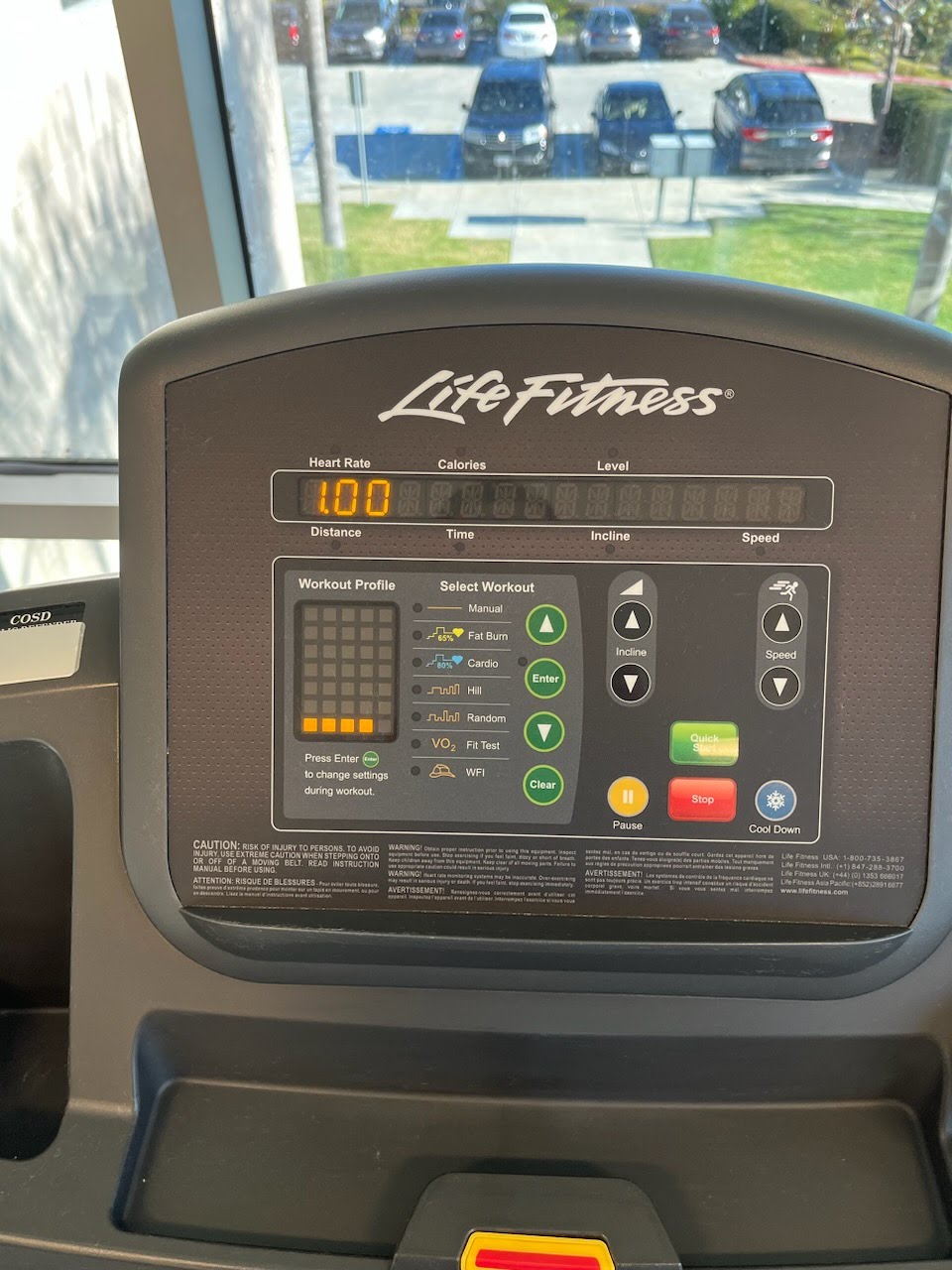
Good workout! Shorter than usual. 5:30am to 6:40am. Mostly cardio. Elastic band rehab to warm up. Five minutes on the bike. Then twenty minutes on the elliptical machine.

Then 1 mile on the treadmill. Twelve minute mile. Nice and easy, not really pushing too hard. Definitely not huffing and puffing. But a good run. Had a good sweat going by the end.

In between each exercise I did two sets of 40 sit ups. I think I’m going to incorporate that into my routine from now on. I feel as though I end up doing way more sit ups this way, than when I try to do them all at once at the beginning or end of my workout.

Tomorrow is the last day of my one month challenge to create this early morning workout routine and create new healthy habits. Time to look at my results and what I’ve learned from this process.

Have a great day! 🙂

How I Created My Early Morning Workout Routine In One Month: Day 29

5am start today! Yes, I’m back on it! Woke up and ran through my routine. Alarm goes off. A little sleepy but not too bad. Immediately turn off the alarm and sit up. Put my feet into my slides (slippers). Turn on the lights. Put on my headset and start listening to inspiring music or motivational speeches. Walk to the kitchen. Check the electric kettle, it’s full. Turn it on. Open the fridge and pull out the cold water. Pour a big glass about 16-18 ozs. Add a heaping teaspoon of apple cider vinegar into the water. Put coffee (decaf) into the pour over filter.

Exit the kitchen. Walk to the restroom. Wash my face with cool water. Splash the water gently into my eyes. Dry my face. By now I’m starting to feel awake. Walk back to the kitchen. Drink my water. Pour the boiling water over the coffee. The aroma of freshly brewed coffee fills the room. Walk back to my room. Put on my workout clothes. I always leave my workout clothes out the night before. They are always the easiest thing to put on. Do a set of sit ups.

Go back to the kitchen. My coffee has cooled just enough to take a drink. Even though it’s decaf, the delicious smell and taste instantly wake me up just a little bit more. Now I’m ready to go. Grab my keys, phone, and ID badge. Walk to the gym. I get to the gym by 5:30am.

Photo by Barbara Olsen on Pexels.com

Cardio day today. But first I start with a little rehab for my shoulder. 2 sets of sit ups. Then 10 minutes of biking. 2 sets of sit ups. Finally, 20 minutes of treadmill. End with 2 more sets of sit ups and finally stretching hamstrings and quads. Need to start doing more stretching when I finish my cardio.

Walked back home. Made my lunch. Wrote this post. Now I have to shave, shower, and get dressed. Then I’m off to work. [Side note: Started using my fitness tracker today. I’m already at about 9500 steps! But interestingly I only got 5:53 minutes of sleep. Got to work on that.]

Still I’m feeling good! Whatever virus it was that I was dealing with last week is out of my system.

Have a great day! 🙂

How I Created My Early Morning Workout Routine: End of Fourth Week – Sunday (Day 28)

Chill day today. It’s a rest day. Woke up at 8am. Meditated. Ran through my routine, minus going to the gym.

Instead, I drank coffee sitting at my desk and worked on my project. Glad I got it done! Have a big week ahead at work!! Have to be fully rested and ready to go.

Later in the morning I went for a 3 mile walk. Very relaxing. It wasn’t too hot.

Treated myself… decided to buy a fitness tracker!

Made a quick trip to the store to pick it up. Got back home, charged it and set it up. Looking forward to using it to track my activity, water, sleep, heart, etc.

Okay, tomorrow I”m back on the early morning grind. I’ve been consistently feeling better for two days. Hoping that means I’m done with whatever bug I was dealing with last week. Shooting for a 5am start tomorrow.

On that note I better get to sleep.

Have a great night or day (depending on when you read this, lol)!